Responses to traumatic events
Following tragedies such as these, people may experience their own difficult reactions, even though we may not have any direct connection to the event. No right or wrong reaction exists and reactions will vary by individual and past experiences. Typical responses to traumatic events may include the following:
- Physical reactions: fatigue, dizziness, rapid heart rate, sweating, difficulty breathing, weakness, and nausea.
- Cognitive reactions: confusion, nightmares, hypervigilance, blaming, poor attention/concentration, suspiciousness, and intrusive thoughts.
- Emotional reactions: fear, guilt, panic, agitation, irritability, anger, shock, anxiety, denial, and grief.
- Behavioral reactions: withdrawal, alcohol consumption, strong emotional reactions, change in appetite, change in activity, change in sexual functioning, and inability to rest.
During times of healing
With time, many of these reactions will abate. During times of healing, the following may help:
- Talk with others whom you trust about your reactions;
- Eat well, exercise, and rest as well as you can;
- Limit the amount of media coverage you watch if you feel flooded or overwhelmed by the news;
- Recognize that your reactions are normal and that the symptoms will improve with time.
Make time for students to talk
We suggest that you make time for students to talk. Taking the time will make classes run smoother because students should be able to concentrate better after sharing reactions. To open the dialogue, you might say, "I am still shaken by the events at VTU, I wonder how others are feeling."
Give time for students to respond, at least 30 seconds. Many students take time to process and may need to find the courage to talk about an emotional event.
Respond affirmatively to students by making statements such as, "I am glad you shared." "I imagine you are not alone with that reaction." "It must hurt to think about the event that way."
Normalize their reactions by sharing that they are responding to an event that overrides their ability to rationalize or make sense of it. "I understand why you are reacting in this way, this event is incomprehensible."
Ask the students what would be helpful (e.g., sending a card to faculty/students at VTU in a similar department or taking a moment of silence).
If you think a student would benefit from discussing these events with a counselor, tell students they are welcome to come in and speak with someone in a confidential setting. "I am aware that your past situation may be contributing to the difficulty you are having and it may be helpful to talk with someone at the Counseling Center about these concerns. They are located at C-36 Clark Building and their hours are from 8-5 Monday through Friday."
Thursday, April 19, 2007

Wednesday, April 11, 2007
Good and Bad
On Losing a Parent
So now that I've gotten a little older, more of my friends and acquaintances have parents that are dying or have died. As our parents are now in our 50s, 60s or 70s, they are mostly dying of either cancer or heart failure. Given that I lost my father at 17 to heart failure, I have a little wisdom to share perhaps -- the kind that only time and experience can give you. The first week of February is the anniversary of my father's death, so it is more on my mind than usual.
When my father died, it was like a lightning strike with the audible echos of its thunder growing ever fainter each year. It was difficult and one of the things that people don't tell you lest you get discouraged is that death can actually be more difficult as you get older. I don't think that being older makes losing a parent any easier, really. At least, that is not what I observe.
So here I will provide my standard advice that I give to my friends when their mother or father has died. For you, my friend, I hope that it might give you a little perspective or comfort.
Follow the jump for the bad news and the good news (though this is not usually how I term it in person, it will give us a little structure for our conversation).
First the bad news:
You will never stop missing your mother or father. There will always be an empty chair at the dining room table. Many happy moments will be slightly darker because a light that would have shone brighter for your happiness no longer shines in this world. The active grieving will take about 2 years to come full circle. Beware that first anniversary. It will hit you harder than you might imagine.
Note though that the grieving process offers different challenges if your relationship with your mother or father was complex or distant. You will mourn not only the parent who has died but the parent you wish s/he had been. Keep your hand on the rudder through the choppy waters. The grey seas will calm, I promise. Resist the urge to lash out at the world or act out in self-destructive ways out of sadness and anger. After about 2 years, more or less, you will feel better. You will reach a new level of peace and acceptance.
On the anniversary or around that time, you may get sick or feel inexplicably tired. You may feel clingy and needy for affection and attention. You may have trouble concentrating or feel preoccupied that day or that week or that month -- you may even not know exactly why. This is normal. Don't fight it. It is natural to remember. Instead, take the opportunity to be generous with yourself. Slow down. Do what you can that day and be patient. The feeling will pass.
The good news:
It's hard to explain in words but once your mother and father have died, while no one and nothing can take their place, you will feel as though they are with you in a whole new way, all the time. In a way they could never have been on this plane of existence.
This feeling can take a lot of forms. Some people suddenly may feel like things are clicking for them. You may feel a warmth, a light or a presence around you at times that you can't define. You may have dreams about your mother or father in which they talk to you about things you never discussed before. You may feel a lightness or a relief. Your priorities may change. There is no need to feel guilty about this. These feelings too are normal.
There's still so little understanding about our souls, our spirits and what happens to them when we die. I can't give you the answers to that. All I can tell you is that while I still miss my father at times, I do feel him with me from time to time in a very special way. I know he is looking out for me and somehow knows when I'm ok and when I'm not.
This is a real gift. Death is a natural part of life. The death of a parent is an event most of us will experience in our lives. It is a rite of passage. It is our birthright -- that we will know death and experience that larger communication with all that is (if we are open to it). That we will experience love that death cannot destroy. That we will be left behind to continue the work of contributing to a better world. When a parent re-joins the One, all that is, they go to "study war no more." That is a typical African-American philosophy around death as is the concept of "going home." Remember the things that they taught you and try to be a better person for seeing how she or he lived their life. That's what your mother or father would want for you. Let the knowledge that your mother or father has gone home -- "home" being a good place, where we all will go one day -- bring some comfort to you and dry some of your tears. Your tears, after all, are shed for you. Your mother or father is in a place beyond tears as we know them. That is their birthright.
So now that I've gotten a little older, more of my friends and acquaintances have parents that are dying or have died. As our parents are now in our 50s, 60s or 70s, they are mostly dying of either cancer or heart failure. Given that I lost my father at 17 to heart failure, I have a little wisdom to share perhaps -- the kind that only time and experience can give you. The first week of February is the anniversary of my father's death, so it is more on my mind than usual.
When my father died, it was like a lightning strike with the audible echos of its thunder growing ever fainter each year. It was difficult and one of the things that people don't tell you lest you get discouraged is that death can actually be more difficult as you get older. I don't think that being older makes losing a parent any easier, really. At least, that is not what I observe.
So here I will provide my standard advice that I give to my friends when their mother or father has died. For you, my friend, I hope that it might give you a little perspective or comfort.
Follow the jump for the bad news and the good news (though this is not usually how I term it in person, it will give us a little structure for our conversation).
First the bad news:
You will never stop missing your mother or father. There will always be an empty chair at the dining room table. Many happy moments will be slightly darker because a light that would have shone brighter for your happiness no longer shines in this world. The active grieving will take about 2 years to come full circle. Beware that first anniversary. It will hit you harder than you might imagine.
Note though that the grieving process offers different challenges if your relationship with your mother or father was complex or distant. You will mourn not only the parent who has died but the parent you wish s/he had been. Keep your hand on the rudder through the choppy waters. The grey seas will calm, I promise. Resist the urge to lash out at the world or act out in self-destructive ways out of sadness and anger. After about 2 years, more or less, you will feel better. You will reach a new level of peace and acceptance.
On the anniversary or around that time, you may get sick or feel inexplicably tired. You may feel clingy and needy for affection and attention. You may have trouble concentrating or feel preoccupied that day or that week or that month -- you may even not know exactly why. This is normal. Don't fight it. It is natural to remember. Instead, take the opportunity to be generous with yourself. Slow down. Do what you can that day and be patient. The feeling will pass.
The good news:
It's hard to explain in words but once your mother and father have died, while no one and nothing can take their place, you will feel as though they are with you in a whole new way, all the time. In a way they could never have been on this plane of existence.
This feeling can take a lot of forms. Some people suddenly may feel like things are clicking for them. You may feel a warmth, a light or a presence around you at times that you can't define. You may have dreams about your mother or father in which they talk to you about things you never discussed before. You may feel a lightness or a relief. Your priorities may change. There is no need to feel guilty about this. These feelings too are normal.
There's still so little understanding about our souls, our spirits and what happens to them when we die. I can't give you the answers to that. All I can tell you is that while I still miss my father at times, I do feel him with me from time to time in a very special way. I know he is looking out for me and somehow knows when I'm ok and when I'm not.
This is a real gift. Death is a natural part of life. The death of a parent is an event most of us will experience in our lives. It is a rite of passage. It is our birthright -- that we will know death and experience that larger communication with all that is (if we are open to it). That we will experience love that death cannot destroy. That we will be left behind to continue the work of contributing to a better world. When a parent re-joins the One, all that is, they go to "study war no more." That is a typical African-American philosophy around death as is the concept of "going home." Remember the things that they taught you and try to be a better person for seeing how she or he lived their life. That's what your mother or father would want for you. Let the knowledge that your mother or father has gone home -- "home" being a good place, where we all will go one day -- bring some comfort to you and dry some of your tears. Your tears, after all, are shed for you. Your mother or father is in a place beyond tears as we know them. That is their birthright.
Monday, April 9, 2007
Effects of losing a parent
Dealing with a Commitment-phobe
A commitment phobia is a fear and subsequent avoidance of having to commit to anything — especially a relationship. Being involved with someone afraid of commitments can be both frustrating and perplexing. In addition, being afraid of any commitment is no picnic either; life is pretty lonely.
While there may be many reasons for this fear, it often begins when a child has a loss of an important person in their life. When a child experiences losing a parent to divorce or if a child’s parent dies; the loss can be so traumatic that the child may always fear losing a loved one. This fear of loss and rejection keeps the commitment-phobe from risking getting attached to anyone. Being a witness to spousal abuse may also induce a fear, a fear of getting hurt or being a hurter and cause the child witness to grow into an adult who never wants to get married.
If you have ever dated someone who says they want to be with you desperately and seems to chase you with incredible zeal till they catch you — and then suddenly turns cool and critical? You may have stumbled onto a commitment-phobe..There are several typical behaviors for the start of a relationship:
1. At first, they have aggressive interest, give lots of compliments and professions of love. Once they know you’re hooked, they suddenly create distance, act trapped, “need space”, criticize you and almost seem to search for a good reason to break up.
2. When a relationship is working well, they annoy or hurt you in an attempt to blow the relationship up.
3. They get very involved and then break up, only to come back to you and break up again and again.
4. They cannot discuss marriage or even living together.
5. They have unrealistic ideas of how perfect someone has to be for them.6. They pick “unavailable” partners so they don’t have to worry about commitment.
If you know you have a fear of commitments, getting psychotherapy to understand the roots of your fear and resolve them can really help.
If you are in a relationship with someone that you think has a fear of commitment, try to discuss it with them. Be empathetic rather than critical, which will only drive them away. Tell them you understand that it is scary for them but that in order for you to stay with them, they have to get help. If, however, you can see the signs in someone before you are in too deep, you might want to move along to a partner without this issue. Working out intimacy with someone afraid of it is no easy task.
There could be a lot of heartache in store, with no certainty of a possible happy ending. It could be time to go looking for a more stable possibility and hope for satisfaction.
A commitment phobia is a fear and subsequent avoidance of having to commit to anything — especially a relationship. Being involved with someone afraid of commitments can be both frustrating and perplexing. In addition, being afraid of any commitment is no picnic either; life is pretty lonely.
While there may be many reasons for this fear, it often begins when a child has a loss of an important person in their life. When a child experiences losing a parent to divorce or if a child’s parent dies; the loss can be so traumatic that the child may always fear losing a loved one. This fear of loss and rejection keeps the commitment-phobe from risking getting attached to anyone. Being a witness to spousal abuse may also induce a fear, a fear of getting hurt or being a hurter and cause the child witness to grow into an adult who never wants to get married.
If you have ever dated someone who says they want to be with you desperately and seems to chase you with incredible zeal till they catch you — and then suddenly turns cool and critical? You may have stumbled onto a commitment-phobe..There are several typical behaviors for the start of a relationship:
1. At first, they have aggressive interest, give lots of compliments and professions of love. Once they know you’re hooked, they suddenly create distance, act trapped, “need space”, criticize you and almost seem to search for a good reason to break up.
2. When a relationship is working well, they annoy or hurt you in an attempt to blow the relationship up.
3. They get very involved and then break up, only to come back to you and break up again and again.
4. They cannot discuss marriage or even living together.
5. They have unrealistic ideas of how perfect someone has to be for them.6. They pick “unavailable” partners so they don’t have to worry about commitment.
If you know you have a fear of commitments, getting psychotherapy to understand the roots of your fear and resolve them can really help.
If you are in a relationship with someone that you think has a fear of commitment, try to discuss it with them. Be empathetic rather than critical, which will only drive them away. Tell them you understand that it is scary for them but that in order for you to stay with them, they have to get help. If, however, you can see the signs in someone before you are in too deep, you might want to move along to a partner without this issue. Working out intimacy with someone afraid of it is no easy task.
There could be a lot of heartache in store, with no certainty of a possible happy ending. It could be time to go looking for a more stable possibility and hope for satisfaction.
Tuesday, April 3, 2007
A Poem by WH Auden
In Honour of my Father's 15th year this month.
Funeral Blues
Stop all the clocks, cut off the telephone,
Prevent the dog from barking with a juicy bone,
Silence the pianos and with muffled drum
Bring out the coffin, let the mourners come.
Let aeroplanes circle moaning overhead
Scribbling on the sky the message He Is Dead,
Put crepe bows round the white necks of the public doves,
Let the traffic policemen wear black cotton gloves.
He was my North, my South, my East and West,
My working week and my Sunday rest,
My noon, my midnight, my talk, my song;
I thought that love would last for ever; I was wrong.
The stars are not wanted now: put out every one;
Pack up the moon and dismantle the sun;
Pour away the ocean and sweep up the wood,
For nothing now can ever come to any good.
W. H. Auden
Wednesday, March 28, 2007
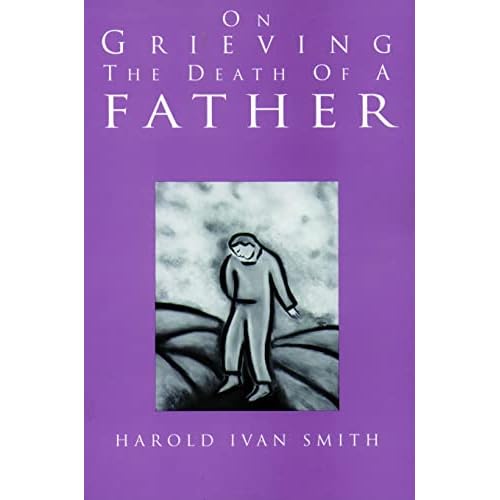
Editorial Reviews
Charlie Shedd, Author, Letters to Karen andBeauty from ashes. Thoughts that soothe the sorrowing heart. With rare skill he takes our hand and leads us through one of life's deepest valleys."
Book Description
Not many books have been written to help the grieving son or daughter deal with the new reality of a deceased father. Smith has combined personal stories from Frederick Buechner, Norman Vincent Peale, Corrie ten Boom, James Dobson, and many other well- known people to help others through their grieving process.
Tuesday, March 20, 2007
Never the Same
 Time does not heal all wounds, warns grief counselor Donna Schuurman in her brave and practical book about the challenges adults face in coming to terms with the loss of a parent before age 18. Her premise in Never the Same defies the common wisdom. "Forget the stages of grief.
There is no magical moment when you can say, it’s over." Using thoughtful self-assessments and examples, Schuurman persuades readers that grief must be reprocessed at every stage of life. First, she invites readers to look backward, examining their reactions and coping strategies at the time of their parent’s death.
Moving into the present, she asks, what meaning do your make of your parent’s death as an adult?
Schuurman details the high cost of unresolved grieving, including depression, anxiety, pessimism, underachievement, and troubled relationships. She then outlines suggestions for dealing with the legacy of a parent’s death and choosing healthy traditions for remembering. Adults and parents will find this a wise and compassionate book—-an indispensable guide to the unfinished business of losing a parent at an early age. --Barbara Mackoff
Tuesday, March 13, 2007
Childrens Book about Loss
 A Mother's Abandonment and a Life in Art, Nature
by Michele Norris
James Prosek's young-adult novel tells the story of a young boy who discovers art and nature after his mother abandons the family.
Learn more about Prosek's artwork.
James Prosek is a master at bringing the outdoors into people's lives through art. He is a celebrated fly-fisherman, a critically acclaimed author and a wildlife artist often described as a modern-day John James Audubon.
How he developed his artistic gift and his love of nature is chronicled in his latest project, a young-adult book called The Day My Mother Left.
Although billed as fiction, Prosek's book is largely autobiographical. It follows the life of 9-year-old Jeremy as his parents go through a bitter divorce. His mother, Phoebe, drowns her depression with alcohol and eventually leaves the family without saying goodbye.
Jeremy copes with the loss by losing himself in the surrounding fields and streams. He finds solace fishing and sketching the wildlife he encounters.
Prosek says he wrote the book as fiction rather than as a memoir because memories from that difficult period of his life were fuzzy. He discusses the book, and how the experience of being abandoned by his mother helped him discover his gifts for art and nature.
Wednesday, March 7, 2007
NPR | Kitchen Window
 By T. Susan Chang
The Once and Future Apple Cake
T. Susan Chang
T. Susan Chang's mother died when she was 14. She has spent much of her adult life trying to re-create her mother's apple cake. Scroll down for the recipe.
“Something in me was protesting. I hadn't earned this apple cake, unlike the ones I'd constructed from charts and experiments and books. There was hardly any effort in making it, and the reward was patently disproportionate. Even its provenance was serendipitous. Like motherly love, it fell squarely in the category of the things we receive without asking, as opposed to the things we work for.”
NPR.org, November 22, 2006 When I was so young that even my taste buds barely remember, my mother used to make an apple cake. This I am sure of, even when I falter on the exact color of her eyes, the shape of her hand, the smell of her red velvet bathrobe.
I recall poorly the world I shared with my mother. Yet I know that sometimes, on those stern fall afternoons when life itself seemed to bow down before some chilly power, I came home to the smell of baked apples.
The cake waited on the linoleum counter, its warm invitation extending beyond our door. It was cut into thick, steaming slices. The crumb was moist, dark and generously appled. To smell it ignited a flare of hope. To eat it was to feel loved, and deserving of love.
My mother died of cancer just after I turned 14, just before apple season. In the brief but complete wreckage of our lives afterward, many treasures disappeared, among them the binder and box where she kept her favorite recipes, copied in her upright, finely looping hand.
When I finally learned to cook a decade later, my grandmother and my aunts were able to supply many of the recipes -- the kung pao chicken, the "lion's head" meatballs, the banana bread -- that were family favorites.
It was many years before I realized the apple cake recipe was missing, and when I did I refused to believe it. I continued to inquire, but the apple cake must have been some private pleasure of my mother's, and nobody knew where it came from.
So began an annual ritual. Each fall, when the air began to sharpen, I would think about the apple cake and attempt to replicate it.
I read food-science books, which instructed me to use oil, not butter, to moisten the crumb. I moved to apple country, where heirloom apples my mother never dreamed of -- russeted, oblate, strawberry pink and gold -- blanketed the October hills. I became a cookbook reviewer, and every time a baking book arrived, I checked for apple cakes. Some were intriguing, with orange zest and cloves or brandy. Others were pruney with molasses, or soft, cakey and damp.
It always seemed my best apple cakes were made in a hurry for friends and that afterward my notes got swept away in the party trash or were otherwise forgotten. One apple cake after another floated down the river of memory; discarded recipes littering its banks.
Each year I felt certain I would reproduce my mother's cake, even if I had to reconstruct it using scientific principles. Each year about late winter, the apples went soft and leather-skinned, and I gave it up for another year.
This fall, I was mailing a package at the town post office when a familiar scent caught my attention. Toni, behind the desk, held up a plate. "Would you like some apple cake? Dotty made it. It's really good."
"Sure," I said. "I love apple cake."
The crumb was moist, the color of a wheat field. It was sweet, not sugary sweet, but appley sweet. The apple chunks (and there were plenty of them) had just a bit of bite left after their time in the oven. I ate it with my fingers and licked off the crumbs."Toni," I said, "could you ask Dotty for the recipe?"
It was not a difficult recipe. In fact, it was practically a "dump cake," the kind where you dump all the ingredients in a bowl and stir.
In my fruit drawer were the old, storied apples of the season -- Blue Pearmains, Roxbury Russets, Father Abrahams -- treasured one generation after another, shipped as scions across the sea, or sprung wild from discarded apple pomace centuries ago. I diced them in, and pushed the heavy batter around in a circle with a wooden spoon.
Something in me was protesting. I hadn't earned this apple cake, unlike the ones I'd constructed from charts and experiments and books. There was hardly any effort in making it, and the reward was patently disproportionate. Even its provenance was serendipitous. Like motherly love, it fell squarely in the category of the things we receive without asking, as opposed to the things we work for.
Yet as the warm breath of apples stole across the house, I began to accept that good things might come in unlikely guise, that what was broken can be made whole. Maybe the perfection of my mother's apple cake was a moving target, never to be satisfied until I made peace with life itself.
I took the apple cake out of the oven. It was craggy on top with protruding fruit, not brown and smooth like my mother's. The apple chunks and chopped pecans jostled shoulder-to-shoulder inside, and it smelled so good I could have torn it apart with my fingers right then and there. But I waited.
My son came home from kindergarten and, with the single-mindedness of childhood, homed in on the cake. He wolfed down a thick slice with a glass of cold milk on the side.
My baby daughter, who still takes her milk neat, without cake on the side, looked on hopefully from her high chair. It was then that I understood, not that everything I'd lost was found, but that in a sense it had never really been lost.
My mother is not only a mother-shaped hole in my heart. The days we walk the earth are but a portion of a whole, for we are dreamed of by our parents and remembered by our children.
My mother's apple cake was planted in me with love and belief, unearned and immortal, to last through empty years and match its memory with future apple cakes. In time, I myself would step into those motherless years long past, to fill them with apple cake and all I hold dear.
This is why I love my apple cake and share it with my children. Because, if all goes well, my children's children, too, will have their tomorrows thickly sliced and sweetly scented, studded with memory, and appled with hope.
Makes 8 servings
3 cups flour all-purpose flour
1 cup white sugar
1/2 cup brown sugar, firmly packed
1 teaspoon cinnamon
1 teaspoon salt
1 teaspoon baking soda
1 1/4 cups vegetable oil
3 eggs
1 teaspoon vanilla
4 cups apples, peeled and sliced or chopped (Russets, Golden Delicious, Granny Smiths, Baldwins and Cortlands all work well)
1 cup pecans
Preheat oven to 350 degrees.
In a large bowl, whisk together the dry ingredients (flour, sugars, cinnamon, salt and baking soda) until thoroughly combined.
Whisk together the wet ingredients (eggs, oil and vanilla) and stir into the dry ingredients. Stir to just combine. Fold in apples and pecans. The batter will be quite stiff. Add 1/4 cup water if desired.
Spread the batter into an ungreased tube pan or ungreased 9-inch-by-11-inch-by-2-inch baking dish. Bake 60 to 65 minutes, until a skewer inserted in the center comes out clean.
3 cups flour all-purpose flour
1 cup white sugar
1/2 cup brown sugar, firmly packed
1 teaspoon cinnamon
1 teaspoon salt
1 teaspoon baking soda
1 1/4 cups vegetable oil
3 eggs
1 teaspoon vanilla
4 cups apples, peeled and sliced or chopped (Russets, Golden Delicious, Granny Smiths, Baldwins and Cortlands all work well)
1 cup pecans
Preheat oven to 350 degrees.
In a large bowl, whisk together the dry ingredients (flour, sugars, cinnamon, salt and baking soda) until thoroughly combined.
Whisk together the wet ingredients (eggs, oil and vanilla) and stir into the dry ingredients. Stir to just combine. Fold in apples and pecans. The batter will be quite stiff. Add 1/4 cup water if desired.
Spread the batter into an ungreased tube pan or ungreased 9-inch-by-11-inch-by-2-inch baking dish. Bake 60 to 65 minutes, until a skewer inserted in the center comes out clean.
Saturday, March 3, 2007
Do something for yourself to honor your parent
 In Honor of My Dad
By Elizabeth Talley Campbell
Five years ago I ran my first marathon, which will always be the most memorable one. Not because it was my first-but because of what it meant to my father.
A few years ago, I received a random mailing from The Leukemia & Lymphoma Association (then called The Leukemia Society of America) advertising the 1999 season of marathons and century bike rides that would serve as the vehicle in raising money for research. I had received a mailing before, but after seeing the word “marathon,” I simply tossed it aside.
As a short distance runner, I had always believed that a distance of that magnitude was rather excessive. Maybe I would run a half-marathon, but not 26.2 miles. Additionally, there was no motivation to achieve such a task. However, the next time I received a mailing, there was one I just couldn’t discard.
I read the literature, which was full of inspiring and moving stories, but nothing changed until a trip in late January 1999 with my parents. I made a point to spend as much time as possible with my father, which resulted in a lot of time behind the wheel. So, I jumped at the opportunity to join my parents at the Gulf Coast for a long weekend.
As I watched my frail father muster the energy that he did not have to slow dance, my heart sank knowing there was nothing that I could do to rescue my father from this terrible disease. I had to do something, anything to help; and raising money for research by running a marathon was the one contribution I could make. That night, I committed myself to the venture by telling them that I would run the Anchorage marathon in Dad’s honor.
After making my decision public, a co-worker of mine who had long thought about running a marathon, decided to join me in my venture. He joined not only for the sake of a good cause, but because he wanted to run in honor of my father. He knew all too well the pain of having a loved one battle a disease for he had lost his mother to cancer several years ago.
Early that February I began training for what would be my first marathon. The Team in Training February running schedule called for a weekly mileage averaging between 20 to 25 miles. However, that number would grow, and I would have to discipline myself to run the prescribed distances at no less than five times a week. It was most important to adhere to the schedule because falling behind on the mileage could increase the likelihood of injuries, and I could not let that happen after investing so much time and effort. There was more to it than ego—I was doing this for my father, so I had to succeed.
Although the mileage varied, the format of the training regimen was basically the same—“short” distance/cross-training on Sundays, medium runs on Tuesdays and Thursdays, semi-long runs on Wednesdays, long runs on Saturdays with optional, but strongly encouraged, rest days on the remaining days. The mileage increased gradually over the course of three months until the final two weeks before the marathon, where we began tapering our runs from a 45+ miles per week high.
There was more to it than just a running schedule and a visit or two to the shoe store. The LSA mailed monthly newsletters featuring useful tips, workshops to attend, and info on various gatherings, which were both training-related and social in nature. Those who were on-line could become members of the Team in Training forum where you could ask questions, make special requests, advertise TNT-related parties as well as receive news on travel plans and directions on where to run that weekend.
I especially enjoyed the weekend runs where you would meet with other members on TNT-scheduled runs, or those organized by your mentor, who for me, as a constant source of support. Pounding the pavement with your fellow brethren made the 20-mile run seem less agonizing. Of course, having my running partner around on a daily basis offered the incentive to adhere to the schedule. I am sure the appreciation was mutual, especially on those Wednesdays when instead of going out for sushi, we would tackle a six to10-mile run!
Every single runner and walker that I encountered had a story of their own, a reason to do what they were doing; you could see as well as feel the determination. Most had relatives that died from leukemia, were battling the disease, or had overcome it. Others did it out of the shear goodness of their hearts. A few were diagnosed with the disease and had beaten it, like one woman on my team who had leukemia just a year and a half ago. Before I knew who she was, I once spotted her running in a Chattahoochee recreation area, wearing a Team in Training jersey and a bandana wrapped around her head. Not cognizant of the fact that her hair had fallen out due to chemotherapy, I thought that maybe she shaved her head in support of female relative with the disease.
"The miracle isn’t that I finished, the miracle is that I had the courage to start." - John Bingham. On Saturday, June 19th, the gun sounded marking the start of the 8:00 am race where I would set out to traverse Anchorage through various terrain and vistas from the Chugach Mountains to the Cook Inlet with 3600 other runners and walkers, most of whom were fellow Team in Training members from across the United States.
I was very fortunate to have a family member present to support my endeavor. My brother Thomas, a runner himself, purchased a ticket at the last moment for a less-than-48-hour trip to Alaska to serve as a representative of my family. His journey was at first going to be a complete surprise for me until they rethought the situation, worrying about the possibility of Thomas missing me all together.
Thomas had stayed up most of the night delivering babies before he left for Alaska. With less than two hours sleep, he drove three hours to Atlanta from his hometown, boarded the plane and arrived in Alaska, showing up just after a Team in Training meeting.
Until that morning, I was concerned about the weather because the forecast called for dismal conditions. Luckily, the rain paused long enough for us to enjoy pleasant temperatures for that time of year. I soon learned, though, that the air temperature was not always the most accurate indicator; the intense rays of the sun warm you quickly when you are so far high on globe.
Around Mile 10, I was wishing that it were overcast and dreary as originally predicted. The first mile and a half I spent trying, to no avail, to separate myself from the masses, which resulted in a less than desired time for my first time split. Once I broke free, I settled into a “quick”, but comfortable pace. During the first half, I spent most of the time ingesting the world around me, chatting with runners from the Michigan chapter, and cheering on the walkers as I passed.
The passing scenery left me awestruck as I tried to soak in as much as possible, as well as the signs with poetry lining the course. Much to my amazement, I managed to pass the assistant coach of my group.
My confidence swelled, thinking that I was going to meet a secondary goal of qualifying for the Boston Marathon. Much to my dismay, my pace began to slow around Mile 16. Something was amiss—nothing physically traumatic, but I felt as if my resources were depleted. It has always been a part of my ritual to limit my intake to water and juice before a race, but I suppose a marathon IS an exception. Luckily there was a kind soul who could tell I was faltering, and offered me a power gel, which provided the boost that I needed. The damage, however, was done, and from then on the run became a struggle.
I did not pay much heed to the majestic mountains or the sparking streams; I could have been trotting through the alleys in an industrial park for all that I cared. And, those once inspiring signs of whimsical poetry required excessive amounts of energy to translate. Meanwhile, my brother navigated via bicycle to various points along the trail to snap video and still shots.
I remember one time in particular near Mile 20 when he asked me “to wave, at least!” but it was very difficult to do as I was beginning to “hit the wall”. A fellow co-worker with experience in running marathons warned me of this phenomenon, where your muscles become completely fatigued once its fuel storage is depleted. I did not believe how I could possibly “hit the wall” being in such excellent shape and doing so well on the 20-mile runs. By Mile 24, I had entered the “survival shuffle.” I knew the end was close, but I could not get comfortable in my pace.
In the last mile of the course, I encountered Insult Hill, which was aptly named. The ascent was brief, but very steep. Half way up the hill, I slowed to a walk. After a few seconds, I heard a booming voice behind me—an unrecognizable one ordering me to get back to running. I reluctantly heeded to the demand from the stranger. Along with the help from the head running coach, I conquered Insult Hill.
The distant cheers of supporters and runners became more audible as I approached the high school grounds where lay the finish line. In my final strides of the event, I raised my hands and let burst forth a cry of delight to which the announcer commented, “She is celebrating ‘cause she knows she’s almost home!” The front-runner who crossed the finish line at 2 hours and 44 minutes had plenty of time to relax, eat, and take a nap by the time I finished the race. I was happy with my performance, though. I met my personal goals of completing the marathon and running it under four hours. I placed 102nd amongst women, with a time of 3:54:46.
My father lost his life in the bitter battle with leukemia July 20, 1999, just a month after the marathon. I was hopeful, even in his last days, that we would recover, but its strength and resistance to treatment was far too great. However, thanks to the advancement of cancer research, I was able to have him here for a year as opposed to only a few weeks.
Around the same time that I decided to run the marathon, I was told that the treatments that my dad had undergone were not successful, and that his time was severely limited. He had tried the traditional chemotherapy, which only put him into partial remission, and the second blast was too much for him to withstand. Around the end of the year, a form of biotherapy was used, but its effects were futile. He would now be subject to monthly treatments with weekly maintenance dosages of an experimental drug that would prolong his life. Even after hearing the heartbreaking news, I refused to believe the inevitable.
Thanks to the company that I had been working with for almost two years, I was able to spend time creating more memories. Not only were they flexible with my schedule, the people there were always there for me. Not a day passed when someone asked how my dad was doing, how training was going, or if there was something that they could do.
Although that last year was very trying, I savored every morsel of the time that I had with him. I was able to enjoy another birthday (both his and mine), another trip to the Gulf Coast, another dark beer at Little Switzerland along the Blue Ridge Parkway, another Rocky Bayou sunset, another boat ride across Choctawhatchee Bay, another cold night on top of a snowy-laden Mount Pisgah, more stories of times past, and a few more family slide shows—that now did not seem so boring. There is no greater gift than that of Time—for it escapes from us all too easily.
Monday, February 26, 2007
Good Reads
For some, research is the enlightenment. Below is a list of books worth checking out.
- The Infinite Thread: Healing Relationships beyond Loss by M.A., Alexanda Kennedy
- Bereavement Ministry Program: A Comprehensive Guide for Churches by Jan C. Nelson
- I Wasn't Ready to Say Goodbye Workbook: Surviving, Coping and Healing After the Sudden Death of a Loved One by Brook Noel
- When Parents Die: A Guide for Adults by Edward Myers
Wednesday, February 21, 2007
Not bad to revisit sometimes
The Stages of Grieving 1) ShockImmediately following the death, it is difficult to accept the loss. A feeling of disbelief.During those first days there is a feeling of being-out-of-touch. 2) Emotional ReleaseThe awareness of just how dreadful the loss is accompanied by intense pangs of grief. In this stage a grieving individuals sleeps badly and weeps uncontrollably. 3) PanicFor some time a grieving person can feel in the grip of mental instability. They can find themselves wandering around aimlessly, forgetting things, and not being able to finish what they started. Physical symptoms also can appear -- tightness in the throat, heaviness in the chest, an empty feeling in the stomach, tiredness and fatigue, and headaches. 4) GuiltAt this stage an individual can begin to feel guilty about failures to do enough for the deceased, guilt over what happened or what didn’t happen. 5) HostilitySome individuals feel anger at what “caused” the loss. 6) Inability to Resume Business-as-Usual ActivitiesThe ability to concentrate on day-to-day activities may be severely limited. It is important to know and recognize that this is a normal phenomenon. A grieving person’s entire being – emotional, physical and spiritual, is focused on the loss that just occurred. Grief is a 100% experience. 7) Reconciliation of GriefBalance in life returns little by little, much like healing from a severe physical wound. There are no set timeframes for healing. Each individual is different. 8) HopeThe sharp, ever present pain of grief will lessen and hope for a continued, yet different life emerges. Plans are made for the future and the individual is able to move forward in life with good feelings knowing they will always remember and have memories.
Friday, February 16, 2007
Approaching Anniversaries
I would love to hear of unique and special ways people have celebrated a loved one/parent's life after they've passed away. My mom's 11 yr anniversary is fast approaching, hard to believe.
Monday, February 12, 2007
Secondary Loss
I eluded to this in a previous posting; the feelings of loss everytime a new event happens in your life, but I found this and wanted to share it.
Secondary Losses
As the initial shock of death fades, it is common for the bereaved to slip into depression or feel panic. When a parent dies, you eventually experience what are known as secondary losses.
Not only have you lost a parent; in a way, you may feel you have also lost a part of your past. Your parent may have been a trusted adviser, role model, or your closest friend. It is not unusual for adults to seek a parent’s advice before they make large purchases or investments — after all, they have years of experience upon which to draw. Was your parent an advisor on child-rearing, relationships, cooking, and health? Perhaps your parents’ home was the place for family gatherings. Without your parent to fulfill all these roles, you may suddenly feel very alone.
Even if you were quite independent from your parents, you may still experience forms of secondary loss. Perhaps you hoped he/she would have lived to see you achieve an educational degree, a career or business goal, athletic accomplishment, your marriage, and their grandchildren. Their death may have preceded your marriage or the birth of your children. A parent’s absence from these important milestones is a form of secondary loss — a part of the grieving process.
The death of a parent often brings on a sense of one’s own mortality. You may become haunted by feelings of “I’m next,” especially as your generation becomes the oldest in your family line.
----------
While I haven't felt the "I'm next" part, the rest of this really resonated with me.
Secondary Losses
As the initial shock of death fades, it is common for the bereaved to slip into depression or feel panic. When a parent dies, you eventually experience what are known as secondary losses.
Not only have you lost a parent; in a way, you may feel you have also lost a part of your past. Your parent may have been a trusted adviser, role model, or your closest friend. It is not unusual for adults to seek a parent’s advice before they make large purchases or investments — after all, they have years of experience upon which to draw. Was your parent an advisor on child-rearing, relationships, cooking, and health? Perhaps your parents’ home was the place for family gatherings. Without your parent to fulfill all these roles, you may suddenly feel very alone.
Even if you were quite independent from your parents, you may still experience forms of secondary loss. Perhaps you hoped he/she would have lived to see you achieve an educational degree, a career or business goal, athletic accomplishment, your marriage, and their grandchildren. Their death may have preceded your marriage or the birth of your children. A parent’s absence from these important milestones is a form of secondary loss — a part of the grieving process.
The death of a parent often brings on a sense of one’s own mortality. You may become haunted by feelings of “I’m next,” especially as your generation becomes the oldest in your family line.
----------
While I haven't felt the "I'm next" part, the rest of this really resonated with me.
Tuesday, February 6, 2007
The Legacy
 I'd love to hear about different ways readers have ensured their parents' legacy is intact and unique ways in which you've commemorated their lives. A friend of mine lost her father to a heart attack several years ago. He was a prosecuting attorney in her home country of Malaysia. While she was back home sorting through his things she ran across his wardrobe of ties. She recalled him wearing so many of them during her childhood that she couldn't part with them, but knew her husband wouldn't wear them, so she made them into a wall hanging. Such a great idea.
Monday, February 5, 2007
and counting
 I still count things that my mom never got to experience with me, like new apartments and houses. To date, I've lived in 7 places that my hasn't seen; 4 rentals with college friends and 3 homes I've owned with my husband. I'm assured it's normal. Any change in your life makes you long to share the new experience with the parent you lost. The book Motherless Daughters by Hope Edelman (appropriate first name) helps me get through these unknowns and new experiences. I recommend having a copy in your nightstand.
Friday, February 2, 2007
The End
Losing a parent seems like the end. It seemed that way to me for a long time. I was overcompensating for the loss in my life and self-destructive. I didn't know how to deal with sympathy from others, I found myself consoling them...it was a part of me that I didn't know, to be pitied.
I was 20 when my Mom passed away. She was sick for a short time, one month, it just wasn't enough time to say the things I wanted to say to her, but do you really ever have enough time?
No matter how you look at it, losing a parent is painful.
This blog is about the end of my Mom's life and the beginning of my own.
I was 20 when my Mom passed away. She was sick for a short time, one month, it just wasn't enough time to say the things I wanted to say to her, but do you really ever have enough time?
No matter how you look at it, losing a parent is painful.
This blog is about the end of my Mom's life and the beginning of my own.
Subscribe to:
Posts (Atom)